



 Back
Back TR
TR
Laboratory
İstikamet Döküm has a modern quality control laboratory that continuously monitors the compliance of casting technologies and infrastructure elements with international standards (TS EN 124, TS EN 1433, etc.).
The quality journey, which begins with the MagmaSoft casting simulation used by our engineering department in all APQP and PPAP processes, is completed with pre-casting raw material control, liquid metal analysis, mechanical tests, microstructure examinations, green sand tests, and precise 3D dimensional control.
1. Spectrographic and Metallurgical Chemical Analyses
The complete and precise chemical composition determination of grey iron, ductile iron, and steel alloys to be cast is controlled before and after casting using the following methods:
- Optical Emission Spectrometer (OES - Mini Lab): With the spectrometer system that performs the chemical analysis of the casting charge within seconds, the ratios of carbon (C), silicon (Si), manganese (Mn), sulfur (S), phosphorus (P), and other alloying elements in the liquid metal are precisely measured.
- Thermal Analyzing Device (Thermal Analyzing Device): Controls the pre-casting inoculation quality of the liquid metal, as well as the liquidus and solidus temperature curves, enabling the optimization of the casting structure while still in the foundry furnaces.
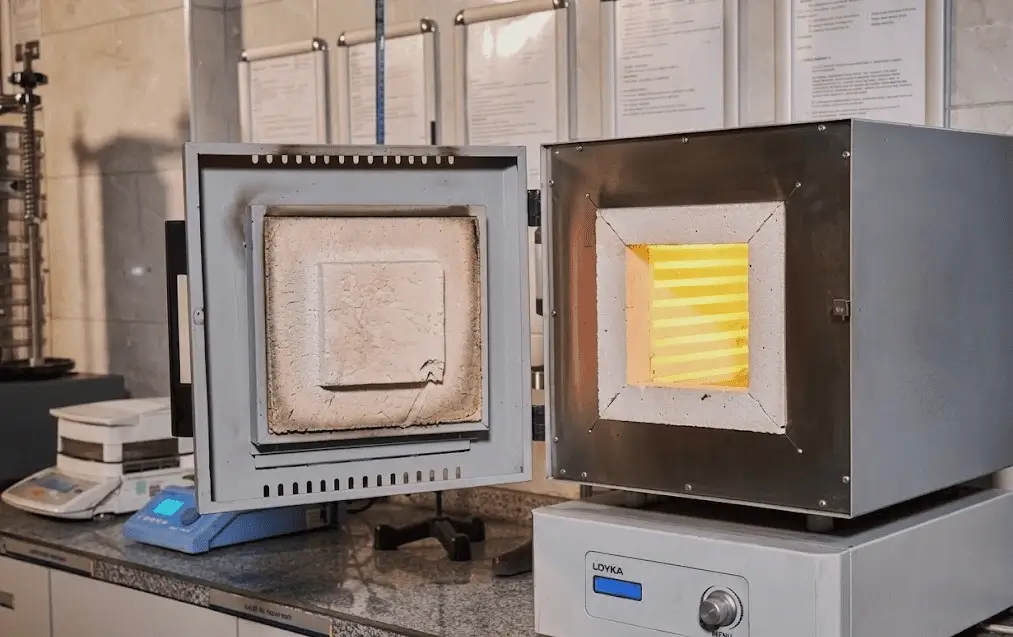
- Heat Treatment and Ash Furnace (Ash Furnace): Controlled heat treatment of casting samples (normalizing, annealing, etc.) and laboratory-scale sintering tests are performed using laboratory-type high-temperature furnaces.
2. Metallographic Examination and Microstructure Analyses
The internal microstructural phases, which directly determine the mechanical properties of cast iron, are examined with specialized metallographic preparation equipment in our laboratory:
- Precision Specimen Cutting Machine (Presi Cutting Machine): Allows samples to be taken from cast parts for microstructure analysis to be cut under coolant without damaging their structure.
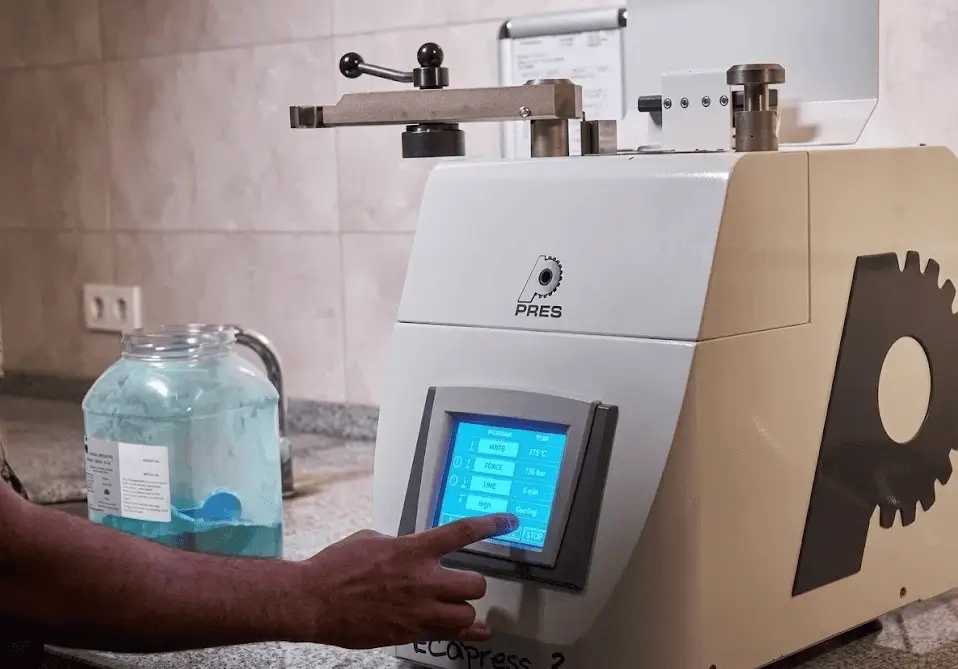
- Hot Specimen Mounting Press (Metkon Ecopress): Ensures that cut samples are mounted with bakelite powder and a high-pressure hot mounting press to prepare them for grinding and polishing operations.
- Automatic Grinding and Polishing Machine (Mecatech Polishing Machine): Ensures that sample surfaces are polished to a mirror finish with abrasive discs so they can be clearly viewed under a microscope.
- Metallurgical Microscope (Microscope): The microstructure of polished and etched casting samples is examined with computer-aided image analysis software to verify the nodularity rate, graphite size, and ferrite/pearlite phase distributions.
3. Mechanical Strength and Hardness Tests
The strength limits of cast parts and polymer concrete infrastructure elements are continuously tested on our mechanical testing equipment:
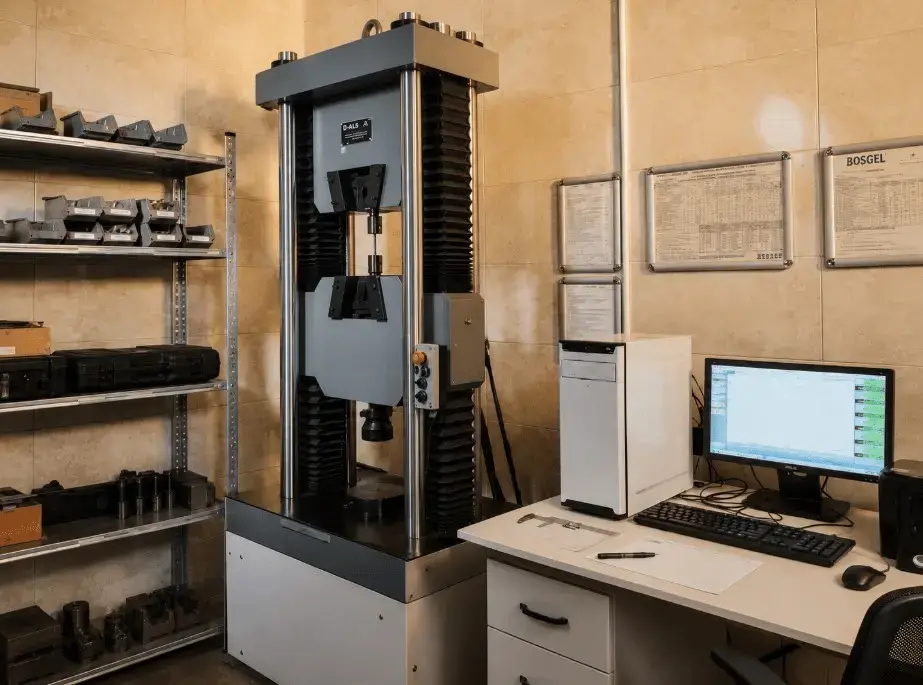
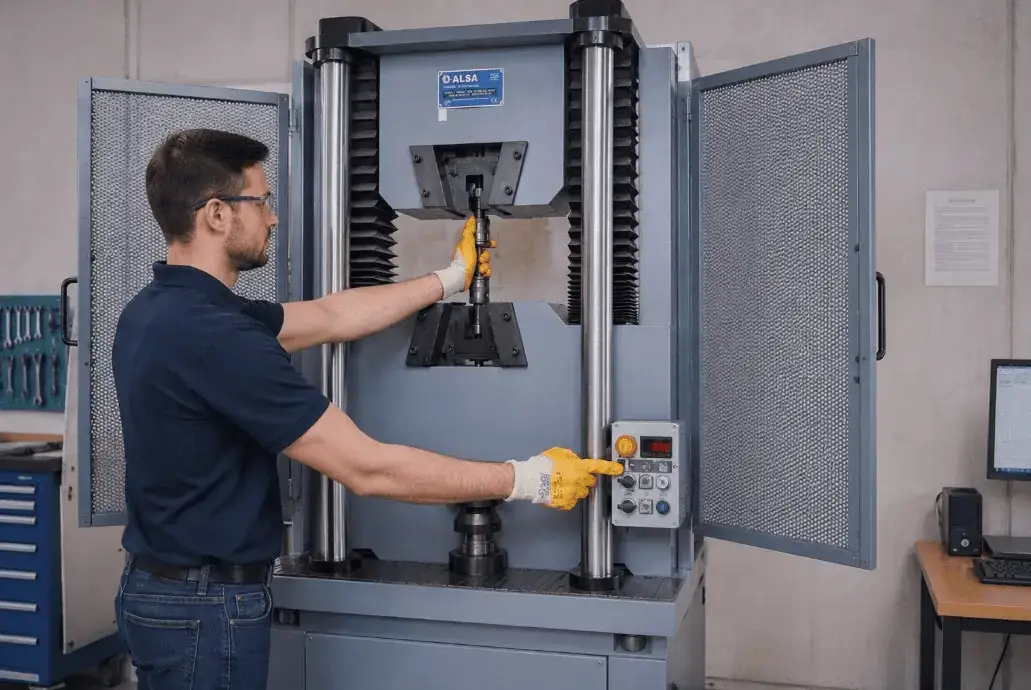
- Universal Tensile-Compression Testing Machine (D-ALSA Tensile Test Machine): Yield strength, tensile strength, and elongation percentage (%) parameters, which demonstrate the casting quality of ductile iron parts, casting grates, and manhole covers, are tested according to international standards (EN ISO 6892-1).
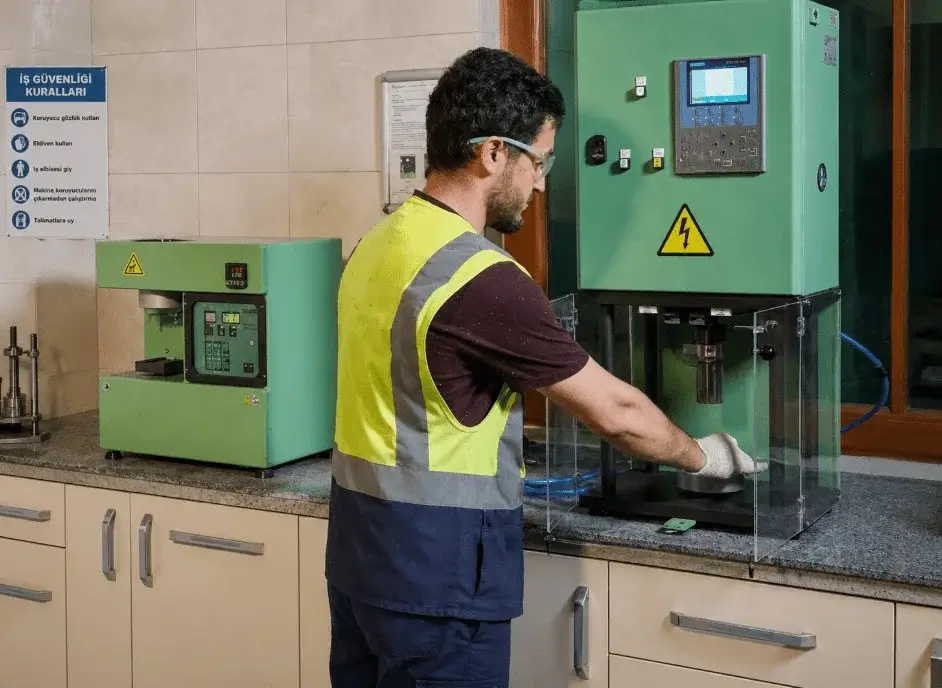
- Hardness Testing Machine (IS 3000-OBPC Brinell & HRC 230 Rockwell): Surface and core hardness values of cast parts are precisely measured in Brinell (HB) and Rockwell (HRC) standards, guaranteeing the wear resistance and machinability of the parts.
- Load Test Machine (Load Test Machine): The compliance of infrastructure products (manhole covers, rainwater grates, and polymer channels) with the load classes (A15, B125, C250, D400, E600, F900) specified in TS EN 124 and TS EN 1433 standards is tested under hydraulic presses to verify their breaking strengths.
- Sürdürülebilir Dökümhane İşletimi ve Çevre Güvencesi: Sustainable foundry operation under ISO 9001 (Quality), ISO 14001 (Environmental), ISO 45001 (Occupational Health and Safety) and ISO/IEC 27001 (Information Security) is also supported by the durability of our products:
- Minimum Compressive Strength: 118.9 MPa (~20 MPa in C20 concrete)
- Minimum Tensile Strength: 15.9 MPa (~1.6 MPa in C20 concrete)
- Minimum Flexural Strength: 27.7 MPa (~4.5 MPa in C20 concrete)
- Maximum Water Absorption Rate: %0.2
- Freeze-Thaw Resistance: Full strength after 1600 cycles of freeze-thaw testing without weight loss.
4. Precision 3D Coordinate (CMM) and Laser Scanning Measurements
The dimensional quality of cast parts intended for sectors requiring high dimensional accuracy such as automotive, agricultural machinery, and wind energy (submarine cable protection pipe accessories) is inspected with computerized measuring equipment:
- Kreon Articulated Measuring Arm (3D Laser Scanner / CMM): With the multi-joint portable CMM device and integrated laser scanning head in our laboratory, the dimensional tolerances of complex cast parts and pattern plates are measured with micron-level precision. The obtained point cloud data (point cloud) is compared with the original 3D CAD data of the part to prepare a dimensional deviation analysis report.
5. Green Sand Molding Laboratory
In order to prevent casting defects that may arise from sand quality during the molding stage, green sand properties are analyzed on each charge with specialized equipment in our laboratory:
- Methylene Blue Test Kit (Methylen Blue Test Equipments): Used for monitoring the active clay content in the molding sand and controlling the strength stability of the sand.
- Sieve Shaker (Sieve Shaker): Determines the grain size distribution (AFS value) of the molding sand.
- Moisture Analyzer (Moisture Machine): Measures the moisture content of the sand in the green sand molding line to optimize the mold surface quality.
- Laboratory Type Sand Mixer (Mini Sand Mixer): Enables new sand mixtures to be tested on a laboratory scale prior to molding to determine the most suitable recipe.



Request a Catalog
PDPL and Privacy Policy
- Policy on the Processing and Protection of Personal Data
- Customer Information Notice in Accordance with the PDPL Regulations
- Exercise of the Data Subject’s Rights in Accordance with the PDPL Legislation
- Law No. 6698 on the Protection of Personal Data
- Communication Regarding the Procedures and Principles to Be Followed in Fulfilling the Disclosure Obligation
- Communication on the Procedures and Principles for Filing Requests with the Data Controller
- Data Protection Law (KVKK) Data Subject Request Form